Subscribe

* indicates required

May 4, 2013

No Freedom ...


Try to think of a world
Where you could stay and these safe hands could go
Take your heart above the water
Wherever I choose to go … 


As vrea sa pot ingana ceva, acum, cand fiecare cuvant doare. As vrea sa pot scrie ceva in iuresul gandurilor, a febrei ce te-a cuprins, in lancezeala corpului, a mintii, a sufletului. Sunt fericiri marunte, care ne fac sa zambim, care ne incarca de energie, care ne poarta spre un alt maine. Sunt zile simple, atat de dulci, departe de … aici. Si totusi, nu sunt ale tale. To be seen, to be heard, to be understood. To see, to hear, to understand. My two-way road. Poate ca mi-am dorit prea mult, am cerut prea mult, sau am dat prea mult. Poate ca n-am stiut pana unde sa merg si unde sa ma opresc. Poate ca ar fi trebuit sa visez mai putin sau poate un pic mai mult. In incercarea de a asterne pe hartie o emotie, un strigat sau doar un simplu inceput de poveste, iti simti fiecare muschi al sufletului inlemnit. In teama de a pasi peste linia propusa, in teama de a nu gresi, in teama de orice si oricine, in cautarea unui alt inceput, a unei rugaciuni, a unui repros sau a unei iertari, in cautarea amintirilor, sau in cautarea unei vechi strangeri de mana, ce mai e de zis, de visat, de sperat, de scris?


March 29, 2013

Calomnii mitologice


Si la inceput a fost Cuvantul… Cuvantul ce a spulberat tacerea, pe care ironic acum o cautam in zeci si mii de cuvinte, de jocuri ale literelor, ale sunetelor, pe care incercam sa o pictam pe coala alba de hartie, sa o prindem intr- adiere de vant, un gand, sau o emotie… Sunt oameni ai Tacerii, ,,introvertitii”, ,,pesimistii”, sau oricum ii vrei numiti, cei care traiesc intr-o lume interioara, intr-un continuu razboi cu propriile idei, si ganduri si emotii, atipici pragmatismului … In marea de ,,nu-uri” si de zgomote, m-am intors la Paler. Prin cartile obligatorii de citit, intre cele luate pentru recenziat, prin cele ce se odihnesc pe rafturi mult prea prafuite, prin toate domino-urile ce cad cu zgomot in aceste zile, m-am intors la ,,molii” si la singuratatea lor, la un Narcis diferit, un Don Quijote sau un Don Juan, o zeitate greaca, privita ganditor, prin sita timpului, la miturile care m-au captivat candva, cautandu-le ecoul in modernitate. Probabil ca asta incearca sa faca Paler cu ele, cu societatea romaneasca,cu lumea secolului XXI,  cu gandirea si sentimentele Omului …
M-am asezat cuminte, pe-o banca din spatele amfiteatrului gol, ascultandu-i conferintele imaginare, conferintelehttp://www.internetmonk.com/wp-content/uploads/void-of-silence.jpeg lui, ale mele, ale tuturor. Povestile despre noi si singurate, viata si temerile comune tuturor, povestea tuturor si-a nimanui. Lasand in urma toate sunetele, toate campurile de lupta, tot ceea ce tine de-un univers pragmatic. Intorcandu-ma spre radacini, spre o constructie a priori, de care nu am habar cum de mi s-a oferit tocmai mie. In zgomotele din sali, de pe coridoare, din tramvaie si orase ruginii, din cafenele arhipline sau mult prea goale, din sunete pe care nu le mai poti distinge sau intelege, dai jos fiecare masca ce o detii, ce o detesti, ce-a devenit mult prea grea pentru a mai fi purtata, si te retragi din tot, in Linistea lui, a mea, a ta…
Nu stiu de ce Paler … sunt scriitori pe care-i porti cu tine mereu, pe care-i scoti din sertarele memoriei si la care te intorci, scriitori personali, a caror scrieri iti rasuna in minte… e imaginea lumii in care traim, farmecul miturilor, anii dusi in suflet, resimtiti in fiecare bataie de inima, sau e doar pauza de care ai nevoie, departe de intreaga lume prafuita, ce-si repeta povestea de doua milioane de ani… Acum sunt cuvintele spuse atunci cand Cortina cade, cand aplauzele amutesc, cand fiecare se indreapta spre casa lui, cu-o imagine a unui actor preferat sau fredonand o bucata muzicala … Sunt cuvintele cand totul se afunda in tacere.

March 7, 2013

At the Core of Literature


I feel home here, but I am not sure if I really belong to this place – among letters, sounds, words and stories, amongonce upon a time and they lived happily ever after, among the strongest feelings that we as human experience, among Everyman and Everywoman ….
Paul Auster reminded me of why I had chosen literature, of my dreams and defeats with bookclubs, of the things that I couldn’t say, of why I had wanted to study literature, of my interest in details (and how important they are in analyzing and understanding fiction), of (im)possible PhDs. There are many things that I could say about this writer, passages that made me stop from reading so that I could write dozens of ideas on my tiny papers. There were moments when I felt the urge to take a pen and start writing myself. There were moments when he pissed me off, moments of suspense, moments of twists, moments when I felt that something was missing … The New York Trilogy is about writing, fiction in fiction, about characters that are partly conscious of their condition in their own fiction, about America and its myths, the Adamic myth, the Garden of Eden, its great thinkers that mold its beginnings (Hawthorne, Melville, Emerson, Thoreau),  satires, games of the mind, reality and fiction. When you finish reading this book, you want to start it all over again, to see the elements that you have missed, to understand this maze of words and images and actions …
“Every life is inexplicable, I kept telling myself. No matter how many facts are told, no matter how many details are given, the essential thing resists telling. To say that so and so was born here and went there, that he did this and did that, that he married this woman and had these children, that he lived, that he died, that he left behind these books or this battle or that bridge – none of that tells us very much. We all want to be told stories, and we listen to them in the same way we did when we were young. We imagine the real story inside the words, and to do this we substitute ourselves for the person in the story, pretending that we can understand him because we understand ourselves. This is a deception. We exist for ourselves, perhaps, and at times we even have a glimmer of who we are, but in the end we can never be sure, and as our lives go on, we become more and more opaque to ourselves, more and more aware of our own incoherence. No one can cross the boundary into another – for the simple reason that no one can gain access to himself.”(248-249, 3. The Locked Room)

February 1, 2013

Vals


Cand nu ,,ma prafuieste timpul peste hartii”, planificari, portofolii si alte maruntisuri, candva in sali de curs, astazi in cancelarii:
 “There were men and women, children and old people, teenagers and babies, rich people and poor people, black men and white women, white men and black women, Orientals and Arabs, men in brown and gray and blue and green, women in red and white and yellow and pink, children in sneakers, children in shoes, children in cowboy boots, fat people and thin people, tall people and short people, each one different from all the others, each one irreducibly himself.” (Paul Auster – The New York Trilogy, p.54)
P.S Mi-e dor de acest amestec de culori dintr-un parc vechi de cand lumea.
http://luizalazar.deviantart.com/gallery/?offset=96#/d5idw2e

January 26, 2013

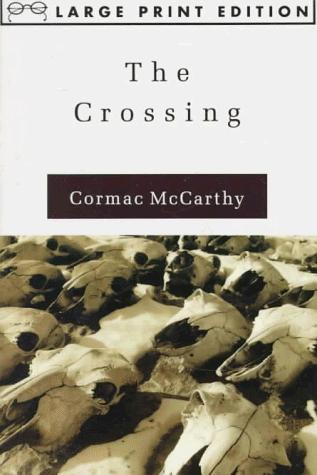
The Crossing


http://images.nationalgeographic.com/wpf/media-live/photos/000/005/cache/grey-wolf_565_600x450.jpg
Am fost intrebata adeseori, in ultima vreme, cum de oare mai am timp pentru a mai citi. E o intrebare fara raspuns, iar tacerea mea poate fi probabil inteleasa de cei ca mine. La randul meu, ma intreb cum de nu ne mai putem face timp in (i)realitatile noastre cotidiene de o pagina sau doua. Si da, ma lupt cu oboseala. Acum, mai mult ca oricand. Cu cestile de cafea aburite, asezate pretutindeni, cu orele prea tarzii de lucru, cu mult prea putinul meu timp ramas.Cu absurditatea tonelor de hartie, aruncate intr-un cos de cancelarie sau pe-un CD irosit. Cu ipocrizia unora, superficialitatea altora, cu ticaitul ceasornicelor invechite. Cu lucrurile mult prea triste, spuse fara cuvinte de ochii unui copil. Ma lupt cu mine insami. Cu temerile mele, care par uneori ruginite-n mine. Ma lupt cu tot in incercarea de a mai crede in ceva. In a-mi mai aminti un vis sau doua. In a nu cadea ,,acolo”, in a ramane Ray.
Probabil ca Dumnezeul meu intim, in care am crezut de la inceput, sau singurul lucru in care am crezut inca de la inceputuri, a fost Omul simplu, cu energia, pasiunile, durerile sale. Omul pe care-l regasesc in omuletii mei, Omul care trece dincolo de frontierele obisnuite. Cand lumea intreaga pare un minunat castfel de nisip si cu totii parem sa ne frangem sub povara propriilor valuri, cand totul se uita, dispare, se pierde, cand ne indepartem prea mult de ceea ce ,,mi-ar fi placut sa fiu”, eu inca mai credeam in ceva. Sau mai cred. In acest El Corrido, My Story, Your Story, His/Her Story, Our Story. Iar literatura care mi-a atras atentia, care mi-a ramas intiparita in minte, in care ma pierd si ma regasesc e centrata pe aceasta credinta, departe de zeitati, de practici, de teorii, de tot ce e pretentios, in care Omul, cu povestea sa, este prezentat, de la microcosmos la macrocosmos.
Departe de a scrie aici o recenzie sau un rezumat. Sunt atatea carti care merita a fi citite, peste care trecem fara sa avem habar ce pierdem. Atatea carti alese neatent, din pura curiozitate, cu teme, stiluri, idei care se repeta la nesfarsit. Iar acele carti pe care le purtam cu adevarat in noi, de care ne amintim in momentele noastre, pe strazile pustii, in trenuri sau in salile arhipline, a caror cuvinte renasc in mintea noastra, ne asteapta tacut, pentru a ajunge la ele.
,,Lucrurile separate de povestile lor, nu au un inteles. Sunt numai forme. De o anumita culoare si de o anumita marime. De o anumita greutate. Dupa ce pierdem intelesul lor, nu mai au nici macar nume. Povestea, pe de alta parte, nu-si poate pierde niciodata locul din aceasta lume, pentru ca ea este, de fapt, acel loc. Si asta puteam gasi aici. El corrido. Istoria. Si, ca toate corridos, pana la urma spune o singura poveste, pentru ca una singura exista si poate fi spusa.” (186 + 187)
Marea trecere
Marea trecere
Harold Bloom vorbeste despre patru mari scriitori americani contemporani: Don DeLillo, Thomas Pynchon, Philip Roth şi Cormac McCarthy. Pe bancile invechite ale facultatii de litere, va mai trece probabil mult timp pentru ca acestia sa fie macar mentionati si apoi studiati. Am ajuns din intamplare la ultimul dintre acestia, cu Marea trecere, a caror pagini surprind cateva dintre aspectele esentiale ale Americii – miturile ei, indienii, sufletul Mexicului, si-al Americii, mentalitatea lor, frontiera -, intr-un stil care te lasa fara cuvinte. E greu sa surprinzi in fata unei astfel de proze, intr-un articol (care va aparea candva la bookblog) acel ceva ,,care nu poate fi cuprins”, acest el corrido. Si cat de mitic, de sacru poate aparea un lup, un joc de artificii, o banalitate in proza lui McCarthy …
In fata sa se intindeau muntii de un alb orbitor in lumina soarelui. Pareau proaspat nascuti de mana unui zeu nechibzuit, care probabil ca nu se invrednicise sa le mai gaseasca si un sens. 39
,,Ca si cum intunericul ar fi avut suflet si ar fi fost asasinul soarelui, iutindu-se catre apus, asa cum credeau oamenii o data, de mult, si poate ca aveau sa creada iarasi.” 93
Pentru iubitorii de proza americana, care au trecut peste stereotipurile gen ,,America n-are o istorie”, ,,literatura
http://galleryone.com/Merchant5/graphics/00000001/mccarthy-mcccr1.jpg
americana e sterila”, ,,America inseamna doar comercialitate”, pentru cei care au studiat Studii americane, dar n-au ajuns la acesti scriitori, pentru cei care constientizeaza ca literatura americana e … literatura americana, McCarthy probabil ca este un (ravasitor) bun exemplu. Iar ceilalti trei scriitori, pentru mine personal, au trecut direct in lista must read. 
,,Pe unde umbla ea, urletele coiotilor se opreau cu un clampanit surd, ca si cum s-ar fi inchis o usa si n-ar mai fi ramas decat teama si mirarea. Ii ridica capul teapan de printre frunze si il lua in brate, sau intinse bratele sa cuprindace nu putea fi cuprins, ceva ce pornise deja printre munti, ceva inspaimantator, dar in acelasi timp de o rara frumusete, precum florile care cresc pe cadavre. Acel ceva din care sunt facute sangele si oasele, dar pe care ele, la randul lor, nu-l pot face, pe nici un altar, dar nici o rana de razboi. Acel ceva despre care credem ca in mod sigur are forta sa taie, sa modeleze si sa scobeasca forma intunecata a lumii, la fel ca vantul sau ploaia. Dar nu poate fi cuprins, nu va fi niciodata cuprins, si nu e floare, ci vartelnita, vanator de care vantul insusi este ingrozit, de care lumea intreaga nu se poate separa.”

January 1, 2013

24

Tot ceea ce vreau sa exprim este Linistea aceea. Abisala, in care orice strigat se prabuseste fara zgomot. Si nu stiu cum sa fac asta. Sau am uitat. Printre cuvinte, valuri, imbratisari, cuvinte, fericiri si din nou, alte cuvinte. Intr-un nesfarsitdéjà-vu. In the silent “mode”. 


December 28, 2012

Daddy Love: The Psychology of Abduction


Do you remember that old song, Runaway Train? When I was a child, I was listening to this song, shocked by its video: There are over one million youth lost on the streets of America. Even now, I do not know exactly what I felt … pity, angriness, sorrow, for all the lives that were/are destroyed by some of us. Literature has always been a mirror of reality, and in its history we discover themes like love, war, family relationships, friendships, religion and many others. Why wouldn’t abduction be one of its themes? A theme which is molded from our own dark reality of the 21st century, which we hear on the news or in some crime films or TV series.  But is Literature – with capital L, the one that is worth reading – entitled to depict such a theme? Why should a writer write about this, when there are so many other things to be talked about?
Somewhere in the book there is a TV discussion around the following question: Why hadn’t the boy left his abductor when he had so many opportunities? The answer that one of the talk-show hosts gives is the following:
Looks to me like the kid could’ve gotten away lots of times. Looks to me like he’d come to like his new life better than with his old family – no school, hanging out, skate-boarding, eating pizzas… I’m suspicious of this kind of thing, kids running away from home and claiming to be ‘victims’.(169)
Daddy LoveJoyce Carol Oates does not write a crime novel, but a psychological one, in a minute way, not to entertain us, but to make us aware of another part of reality. Robbie is an intelligent five-year old boy who is abducted in a parking lot. He is not the first boy who is abducted by Daddy Love and not the first one who is sexually abused. The book, as I already said, is not for entertainment and it is very difficult to be read by the sensitive ones; with every page that you read, you want to be lied, you wish for a real happy-ending – for the little boy, for the mother, for his family; you hope that the six years of captivity will disappear in the end and everyone will be happy. You do not want to know Daddy Love’s sick thoughts, or that the dog – Robbie/Gideon’s only friend – was brutally killed in front of the boy, you simply wish for a small good thing for the child. But Oates gives you only the reality, an X-ray of the human soul, the roots of the evil and its consequences, depicting the psychology of the mother, of the abductor, of the father, and the most intriguing one to my mind, of the boy.
“The Preacher did not stand at the head of the flock and preach to uplifted faces but moved between the rows of seats in the central and side aisles of the little church with the ease and grace of a true shepherd. Often the Preacher reached out to touch a shoulder, a head, an outstretched hand – Bless you my brother in Christ! Bless you my sister in Christ! God loves you.” (40)
Daddy Love’s perspective is the main one in this novel. Interesting enough, when we first meet him, the abductor wears the clothes of a Preacher, utterly different from what we shall discover afterwards. Religion is extremely important to him, he gives to his “sons” Biblical names, and there are several analogies that he makes in his mind with saints or martyrs. He sees himself as a savior, as a Jesus or as a Dalai Lama, thinking once that he is the “reincarnated spirit of Tibet”(67):
The Wooden Maiden was an ingenious invention of Daddy Love. As Jesus was a carpenter, so too Daddy Love was good with his hands, and found such “handyman” work soothing. He would make of his sons apprentices in such work. A child was never too young not to help his father. (74)
However sick he would be, he knows how to read the psychology of the crowd, able to remain invisible when he abducts “his” children: The ordinary individual, Daddy Love had discovered, was not so very different from a child in his perceptions and expectations.” (52)
Men that are ordinary, common, like the rest, are invisible. Witnesses cannot “get it right” because they “see only what their eyes see, not what is invisible.” (53) In the eyes of the world, he is simply a father with his son, a Believer, just one of the many; he is the “restless American type” (56). On the other hand, he wants to be something else, different, unique; he loathes women, but he is adored by them, and he enjoys this, he sees himself as an artist, a painter or a sculptor, and he really thinks that he saves those boys from their mothers, although he is unable to love anything or anyone, having no voice of consciousness.
Moreover, the narrator does not explain in long sentences why Chet Cash became Daddy Love, but it gives us flashes of his memories, without any further analysis. We find out that “He had not seen his fucking “family” – fucking “relatives” – who’d betrayed him to the Wayne County, Michigan juvenile authorities, aged twelve, in twenty-six years.”(51)
Daddy Love is not the only one who is influenced by the past, but also Dinah’s mother, in the few chapters that are dedicated to her drama, is caged in her own past. Therefore, before the abduction, Dinah is the mother who is haunted by her own problems that are rooted in her relationship with her own mother. Both she and her husband, Whit, promised to themselves that their son will be raised to be happy: “God damn, Dinah, we’re going to bring up our son to be happy. None of this bullshit from our families, O.K?” (36) She is the passive kind of person, unable to scold anyone, accepting everything, who has moments of hating herself, obsessed with the thought of being a bad mother: “You must hide from your child your own foolish uncertainties. You must hide from your child your own sudden sharp-as-a-razor self-loathing.” (6)
Although she was on the verge of dying when Robbie was kidnapped, she cannot forgive herself for letting off of his hand. Sinking into pain, “in the defeat of her life” (29) confronted with the ignorance of the world, found on the Internet (where she is judged) or on TV programs, she redirects all her thoughts towards her missing son:
It was a pit of confusion into which she fell head-long. She was aware that she was very likely dying because her breathing had ceased because her skull was cracked because her soul was leaking through the crack like smoke from abandoned, long-smoldering mines in Pennsylvania that yet continue to ascend through cracked pavement.”(28)
She does not say anything about her husband’s infidelity, of the times when he sinks his own pain in alcohol, the times when he comes late at home, but Whit’s “inner, essential life” is drawn for six years in the direction of finding his son: “[…] you attribute your subsequent life – every mood, every downturn – to that catastrophe. You can’t imagine an alternative life. There is only one life. You have no perspective.” (247)
This inner life of his is sharply defined in the following excerpt:
His sexual being, the very essence of his soul, had been obliterated, at the time of his son’s abduction. His sense of himself as an individual with some degree of control over his life had vanished utterly. His fatherhood, his manhood, his dignity. Another man, a predator, had taken his son. It might have been the most ancient and primitive of insults, Whit thought. More even than the abduction of a wife. (239)
Robbie’s disappearance affects the life of his family and Daddy Love’s actions. What about him? How can a smart young child survive for six years of torture and “cuddle-time”? Oates rarely gives him a voice. From Dinah’s perspective, and later his teachers, we find out that for a while, he is a good child, a prodigy, already mature for his age. “And quick. And smart. Fascinated by words.” (12) In the “care” of Daddy Love, Robbie becomes Gideon, the biblical brave warrior, and somehow, ironical, he is one. Slowly, we have “a new look in the boy’s eyes – no longer younger.” (117) There were pages that I could barely read. And somehow, you keep on reading, hoping for a miracle, because I guess that any reader will sympathize with Gideon. You hope that the child will be okay, although, in your mind, you know that this will never happen. Or will it?
Daddy Love brainwashes Gideon, shaping him as he wants, applying Skinner’s methods:
“He’d [Daddy…] read of “conditioning” – the great American psychologist B.F. Skinner and before him the nineteenth-century Russian Ivan Pavlov. But his natural instinct was to reward, and to punish, in such a way as to instill love, fear, respect for and utter allegiance to Daddy Love in the child-subject.”(57) […] That was the Skinner-method of conditioning: praise not blame, rewards not punishments. But hell, punishments were fun.” (124-125)
Gideon remains a very smart boy, who starts telling his story, unaware, at school, through his unique drawings. In his mind, he is making the difference between the Son – what the kidnapper sees, what he wants his “son” to be – andGideon – the one who thinks, who feels, who rebels, the “warrior”:
Son had no plan. Gideon had (maybe) a plan. Son lived in present-tense. Son was is. Gideon lived in past-tense. Gideon was was. Except, Gideon was smarter than Son. Gideon was older than Son and so could live in present-tense if he wished, and in future-tense. Son had smothered in the safety-box. Son had not survived. Son had survived. But as a worm survives making itself small, twisted, flat. Son was not Gideon. Son said to Daddy Love Yes Daddy. I love you Daddy. Gideon said to Daddy Love Yes Daddy. But thinking his own (mutinous) thoughts. (163-164)
However, Gideon starts punishing the ones who has no fault. Gideon starts resembling (more or less) Daddy Love. Gideon loves, in a way, Daddy Love, because Gideon only remembers the time that he spends with Daddy Love. There is an interesting combination in this boy of the Stockholm syndrome with the remains of Robbie’s fragile memories. How normal will this child eventually be? Can you plant evil and expect to collect good things?
Daddy Love is not an easy book, but one extremely well written, raising many questions and subjects of discussions. It is a realistic book – maybe too realistic -, not for entertainment, but it gives us an insight of a traumatic experience, written for those who are interested in the world that we live today, in psychopaths, in psychology, as well as for those who state things like the one the TV host has said. As Dinah was thinking, “Unless you’d lived the hell that Robbie had lived, you could not know. And you could not judge.” (270)
 [The Mysterious Press, an imprint of Grove/Atlantic, Inc. New York, 2013, ISBN: 978-0-8021-2099-1, NetGalley]

Leap of Faith

Pentru o buna perioada de timp, acesta a fost anul in care mi-am pierdut cuvintele si a trebuit sa ma gasesc pe mine in naufragiul produs.  ...