Subscribe

* indicates required
Showing posts with label American literature. Show all posts

December 22, 2019

Gilead

”I had a design”, cum spunea un personaj din Faulkner, și la fel ca el, nu știu exact ce s-a întâmplat cu acesta. Încă de la grădiniță am știut ce vreau să fiu și să fac pe viitor, iar pe măsură ce am crescut, am fost tot mai convinsă de drumul ales: să predau, să călătoresc cât mai mult, să scriu cărți, să îmi termin studiile până în 30, să am un copil, o casă, cu o grădină mică. Nu știu câtora li se întâmplă să se gândească la acel copil nenăscut cu multă vreme înainte de apariția lui/ei – dacă lucrez aici/dacă mă mut aici/dacă fac asta.... cum îl va influența –, câți dintre noi se întreabă involuntar, încă dinaintea apariției lui/a ei cum ar proceda într-o anumită situație, câți simt acea căldură, acea liniște când iau un copil mic în brațe, indiferent de cum ne-a fost ziua sau cât de obosiți suntem, câți se gândesc la ce vor să lase în urmă pentru el/ea, sau ce ar putea să îl/o învețe, prin acțiunile proprii, câți sunt speriați de a nu repeta greșelile pe care ,,ai noștri” le-au făcut cu noi. 

Gilead este o scrisoare deschisă către un astfel de copil, dintr-un loc uitat de timp, în care timpul pare că nu există, iar această stare de atemporalitate, de oprire în loc este datorată și stilului scriitoarei – unul extrem de clasic, de tradițional, în care nimic nu trădează că a fost scris în 2004 – și din memoriile personajului principal. Este un roman prin care cu greu se navighează, din cauza acestei stări de latență, de nimic ce nu pare să se întâmple în el, un roman mai degrabă de stare decât de acțiune (și nu o dată m-am întrebat dacă acest copil va avea răbdarea necesară să citească toate aceste rânduri care par mai degrabă o meditație – până la un anumit punct – decât o conversație cu propriul fiu). Și nu în ultimul rând, cred că este un roman pentru americani, pentru cei care au trăit în acel loc, care au trăit acea istorie, care înțeleg cu adevărat istoria războiului civil și felul în care sclavii erau tratați și relația dintre ,,albi și negri”, dintre sud și nord. 

Înaintând în roman, descoperi că Gilead nu este o simplă (plictisitoare) scrisoare către un fiu, ci arată legătura dintre tați și fii, dintre tații care au militat pentru abrogarea slaviei și fii care au fost pacifiști convinși, dintre părinții (biologici sau spirituali) care și-au iertat proprii copii, despre copiii care au trădat credințele propriilor părinți (fie ele religioase sau înrădăcinate în mentalitatea sudului), spunând povestea a trei generații. 

Cred că cel mai important la acest roman este ca cititorul să se lase purtat de ritmul acestei scrieri, un ritm, așa cum am mai spus, extrem de clasic pentru anul în care a fost scris. Paradoxal, cred că acest ritm este atuul și totodată punctul slab al cărții – el conturează acea unicitate a acestui roman contemporan, acel lirism al cărții prezent în legătura dintre părinți și fii, și totodată, pentru mulți cititori, acest stil creează confuzie și pe mine personal m-a făcut să mă întreb dacă chiar mai era nevoie de o altă carte despre acea pagină din istoria sudului, dacă nu cumva, așa cum noi suntem obsedați să facem filme despre perioada comunismului și foarte puțini scriitori români au reușit să evadeze din această perioadă și au reușit să găsească (cu succes) noi subiecte în contemporan, tot așa și unii scriitori americani (și nu numai) se încăpățânează să rămână în trecut și nu știu când să lase acest trecut în urmă. 

În câteva cuvinte, este greu să găsesc oameni cărora să le recomand acest roman. Pe mine una m-a liniștit tocmai prin această antiteză cu propria persoană, mi-a domolit neliniștile și acea febră continuă a minții. Este o carte scrisă cu gândul la pierdere – a propriei tinereți, a propriei vieți, a persoanelor dragi, a memorilor și astfel a propriei identități, iar tocmai din această pierdere reiese setea de viață a protagonistului. O recomand astfel persoanelor care iubesc o carte lirică, care nu pun prea mare preț pe acțiune, care (încă) mai doresc să mai citească o pagină tipică din istoria sudului american, care sunt spirituale (sau sunt deschise la așa ceva), care vor să citească o meditație despre sensul vieții și al morții, și care vor să citească ceva nu tocmai ușor despre dragostea unui tată pentru viață și propriul fiu.

 "My father said that in those days after he came back from the war, he used to go off and sit with the Quakers on the Sabbath. He said his father's church was half empty, and most of the people there were widows and orphans and mothers who had lost their sons. Some of the men brought sickness home from the camps – "camp fever," they called it—and their families went down with it. Some of the men had been in Andersonville and came back almost beyond saving. He said half the graves in the churchyard were new. And there was his father, preaching every Sunday on the divine righteousness manifested in it. That would set the old women to weeping, he said, and then the children would start in. He couldn't bear it."
"That is how life goes—we send our children into the wilderness. Some of them on the day they are born, it seems, for all the help we can give them. Some of them seem to be a kind of wilderness unto themselves." 
"Calvin says somewhere that each of us is an actor on a stage and God is the audience. That metaphor has always interested me, because it makes us artists of our behavior, and the reaction of God to us might be thought of as aesthetic rather than morally judgmental in the ordinary sense." 
"In every important way we are such secrets from each other, and I do believe that there is a separate language in each of us, also a separate aesthetics and a separate jurisprudence. Every single one of us is a little civilization built on the ruins of any number of preceding civilizations, but with our own variant notions of what is beautiful and what is acceptable—which, I hasten to add, we generally do not satisfy and by which we struggle to live. We take fortuitous resemblances among us to be actual likeness, because those around us have also fallen heir to the same customs, trade in the same coin, acknowledge, more or less, the same notions of decency and sanity. But all that really just allows us to coexist with the inviolable, untraversable, and utterly vast spaces between us." 
July 10, 2018

White Noise: Sound of Life and Death


“How strange it is. We have these deep terrible lingering fears about ourselves and the people we love. Yet we walk around, talk to people, eat and drink. We manage to function. The feelings are deep and real. Shouldn’t they paralyze us? How is it we can survive them, at least for a while? We drive a car, we teach a class. How is it no one sees how deeply afraid we were, last night, this morning? Is it something we all hide from each other, by mutual consent? Or do we share the same secret without knowing it? Wear the same disguise.”
“What if death is nothing but sound?”
“Electrical noise.”
“You hear it forever. Sound all around. How awful.”
“Uniform, white.” (228)


Close your eyes and listen – there is so much noise around us: the cars in the streets, the working machineries in old and new factories build inside the city, the background music. The song of birds, heard somewhere among all these. The sound of animals, of trees, of wind, of rain. The sound of the keyboard, of our fingers. The sound in the supermarkets, in schools, in cars, in our homes, our trips, our beds. And the everlasting sound of our brains, the whispers, the buzzing, the sound of pain and angst. Never stopping, never leaving, so old in us that we simply ignore it. But it is there, with us. The sound of our insanity, of our battlefield.

All of these sounds represent Life, and paradoxically, it can also be the sound of Death, death waiting at every corner, in every whisper, in every movement. A wrong movement, a crazy man, an accident of any sort.

White Noise was my first encounter with Don DeLillo. Smart writing, easy to read, unlike some of his contemporary American writers, but with a rich vocabulary. A writer who plays here, in an absurd, ironic way, with two themes: our tremendous fear of death and the society in which we live – consuming everything, having access to all kinds of machines, of pills, of drugs, the era of money, where everything can be found, where everyone is so far away from their archaic selves … .

"Traffic lights swayed on cables in a sudden gust. This was the city’s main street, a series of discount stores, check-cashing places, wholesale outlets. A tall old Moorish movie theater, now remarkably a mosque. Blank structures called the Terminal Bilding, the Packer Building, the Commerce Building. How close this was to a classic photography of regret. (105-106)

"It’s Malcolm, of course. He’s got his jungle. What does she have? A huge airy kitchen with a stove that belongs in a three-star restaurant in the provinces. She put all her energy into that kitchen, but for what? It’s not a kitchen at all. It’s her life, her middle age. Baba could enjoy a kitchen like that. It would be a kitchen to her. To Mother it’s like a weird symbol of getting through a crisis, except she hasn’t gotten through it." (113)

"The truth is I don’t want to die first. Given a choice between loneliness and death, it would take me a fraction of a second to decide. But I don’t want to be alone either. Everything I say to Babette about holes and gaps is true. Her death would leave me scattered, talking to chairs and pillows. Don’t let us die, I want to cry out to that fifth-century sky ablaze with mystery and spiral light. Let us both live forever, in sickness and health, feebleminded, doddering, toothless, liver-spotted, dim-sighted, hallucinating. Who decides these things? What is out there? Who are you?" (121)

"The more things I threw away, the more I found. The house was a sepia maze of old and tired things. There was an immensity of things, an overburdening weight, a connection, a mortality. I stalked the rooms, flinging things into cardboard boxes. Plastic electric fans, burnt-out toasters, Star Trek needlepoints. It took well over an hour to get everything down to the sidewalk. No one helped me. I didn’t want help or company of human understanding. I just wanted to get the stuff out of the house. I sat on the front steps alone, waiting for a sense of ease and peace to settle in the air around me." (301)


"The terminals are equipped with holographic scanners, which decode the binary secret of every item, infallibly. This is the language of waves and radiation, or how the dead speak to the living. And this is where we wait together, regardless of age, our carts stocked with brightly colored goods. A slowly moving line, satisfying, giving us time to glance at the tabloids in the racks. Everything we need that is not food or love is here in the tabloid racks. The tales of the supernatural and the extraterrestrial. The miracle vitamins, the cures for cancer, the remedies for obesity. The cults of the famous and the dead." (375)

July 31, 2015

Re-Imagining Old Languages


“Our family is not what it was, but we are all gravitating back into family lives of one sort and another; it is a drift that people cannot seem to help, in spite of lessons learned the hard way … I think often of the ancient times, long before Latin, when words were new and had no connotations. Pure words stood for single things: ‘Family’ meant people in a house together. But that was in a language so far back that all its words are gone, a language we can only imagine.”

 (Rich in Love, Josephine Humphreys)

June 14, 2015

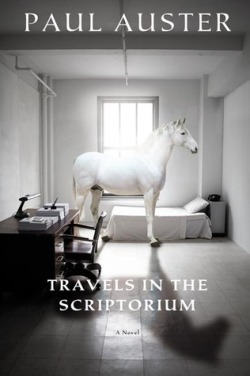
Travels in the Scriptorium

Mi-e teama de singuratate. Mereu mi-a fost. Atat de teama incat am acceptat ani la randul iluzia unei inchipuiri. Atat de teama incat nu am vrut sa vad sau sa inteleg cat de singuri suntem in aceste iluzii, in aceste creionari ale oamenilor pe care dorim sa ii pastram in viata noastra si pe care ii consideram speciali. Atat de singuri incat nu mai vedem ca acei oameni pe care candva i-am venerat si i-am pretuit nu mai sunt demult aici, cu noi. Dar continuam sa ne hranim prin amintiri.

Ne inchidem adeseori intr-o camera ideala, feriti de Realitatea mult prea nemiloasa, nemaigandind, nemaidorind sa ne amintim, captivi in rutina, in cotidian, in iluzii si afundati in temerile noastre pentru a mai vedea si altceva. Daca dam frau liber imaginatiei si incercam sa ne jucam putin cu filosofia sau cu teologia, am putea ajunge si noi in camera lui Paul Auster, din Travels in the
Scriptorium.

“Who is he? What is he doing here? When did he arrive and how long will he remain?” (1)

Travels in the Scriptorium este o carte ideala pentru o zi caniculara, de vara, scurta si simpla, dar care ne antreneaza imaginatia. Suntem cu totii niste Mr. Blank, prea absorbiti de fricile noastre pentru a mai indrazni sa verificam daca usa este sau nu deschisa, prea adanciti in remuscari inconstiente pentru a ne aminti de ceea ce am facut sau de oamenii pe care i-am ranit. Si de ce nu, suntem cu totii niste personaje in cautarea raspunsurilor de mai sus. Cine suntem? Ce cautam aici? Cum am ajuns aici, cat vom mai sta? Ne jucam de-a Dumnezeu, asa cum demult, poate un Dumnezeu/creator s-a jucat cu noi. Si la fel ca el, ne intrebam la sfarsitul unei zile “When is this nonsense going to end?”


“It will never end. For Mr. Blank is one of us now, and struggle through he might understand his predicament, he will always be lost. I believe I speak for all his charges when I say he is getting what he deserves – no more, no less. Not as a form of punishment, but as an act of supreme justice and compassion. Without him, we are nothing, but the paradox is that we, the figments of another mind, will outlive the mind that made us, for once we are thrown into the world, we continue to exist forever, and our stories go on being told, even after we are dead.” (129)

February 28, 2015

Et in Arcadia Ego

Violence tortures me. I hate it, I run away from it; I try to avoid it as much as I can. Violence is my weakest spot, be it physical or hidden in the spoken word. I turn off the TV when I see it, or I change the channel. I skipped classes when my teachers/professors were too aggressive, I gave up my pride, my point of view when my friends were too violent in their language. I withdraw in myself. In 90% of the cases, I run away. Because violence is my torture, the thing that I hate the most, the thing that I cannot face. Sometimes I answer through violence. And I hate myself when I do this. I wish we could live in a peaceful world, without wars, fights, violence….

“It was thirty minutes before anyone appeared in the street.  They spoke in whispers.  As they approached the cantina one of the men from inside appeared in the doorway like a bloody apparition.  He had been scalped and the blood was all run down into his eyes and he was holding shut a huge hole in his chest where pink froth breathed in and out.  One of the citizens laid a hand on his shoulder.
A donde vas? He said.
A casa, said the man.” (190)

So how the hell can I read and choose him?

I strongly believe we are our choices. And as this book points out, human beings are beasts. It is in our nature – Americans, Romanians, Chinese, Russians – to be driven by evil, to hit, to kill, to hurt the one next to us. We are selfish beings, animals, and most of us are unable to see the Other, be it male or female, husband or wife, mother, father, friend, sister or brother. We see ourselves as the Universe, either we acknowledge this or not, and nobody and nothing else, except our needs, matter. In our road to success, or growing up, we leave behind dreams, people, principles. We blame the others, rarely ourselves. We lack time to try to see through their eyes. And we become the things that we hated the most. In our way to conquer civilization.  

Cormac McCarthy is a highly intellectual writer. His prose is filled with symbols from various areas, and in order to really understand him you need some help – history books, knowledge of Spanish, German, philosophy, religion. He is one of the most lyrical writers that I have ever known. And at the same time, Blood Meridian is by far the most violent book that I have ever read, and one of the most shocking. It was really difficult to digest, to understand, and way too often it was unbearable. It was also difficult when it came to vocabulary, to syntax, to style. After I had finished it, I didn’t know what I want to do next: to start all over again, so I can understand it better, or I felt happy that it was over, no more massacres, deaths, killings …


I don’t know how many can read such a book because of its violence and language, but I know for sure that this novel goes beyond literature. Man is war, man is destruction, man is chaos. And still, I stubbornly believe that there is a glimpse of hope for this world. Because violence is my torture.  

December 28, 2012

Daddy Love: The Psychology of Abduction


Do you remember that old song, Runaway Train? When I was a child, I was listening to this song, shocked by its video: There are over one million youth lost on the streets of America. Even now, I do not know exactly what I felt … pity, angriness, sorrow, for all the lives that were/are destroyed by some of us. Literature has always been a mirror of reality, and in its history we discover themes like love, war, family relationships, friendships, religion and many others. Why wouldn’t abduction be one of its themes? A theme which is molded from our own dark reality of the 21st century, which we hear on the news or in some crime films or TV series.  But is Literature – with capital L, the one that is worth reading – entitled to depict such a theme? Why should a writer write about this, when there are so many other things to be talked about?
Somewhere in the book there is a TV discussion around the following question: Why hadn’t the boy left his abductor when he had so many opportunities? The answer that one of the talk-show hosts gives is the following:
Looks to me like the kid could’ve gotten away lots of times. Looks to me like he’d come to like his new life better than with his old family – no school, hanging out, skate-boarding, eating pizzas… I’m suspicious of this kind of thing, kids running away from home and claiming to be ‘victims’.(169)
Daddy LoveJoyce Carol Oates does not write a crime novel, but a psychological one, in a minute way, not to entertain us, but to make us aware of another part of reality. Robbie is an intelligent five-year old boy who is abducted in a parking lot. He is not the first boy who is abducted by Daddy Love and not the first one who is sexually abused. The book, as I already said, is not for entertainment and it is very difficult to be read by the sensitive ones; with every page that you read, you want to be lied, you wish for a real happy-ending – for the little boy, for the mother, for his family; you hope that the six years of captivity will disappear in the end and everyone will be happy. You do not want to know Daddy Love’s sick thoughts, or that the dog – Robbie/Gideon’s only friend – was brutally killed in front of the boy, you simply wish for a small good thing for the child. But Oates gives you only the reality, an X-ray of the human soul, the roots of the evil and its consequences, depicting the psychology of the mother, of the abductor, of the father, and the most intriguing one to my mind, of the boy.
“The Preacher did not stand at the head of the flock and preach to uplifted faces but moved between the rows of seats in the central and side aisles of the little church with the ease and grace of a true shepherd. Often the Preacher reached out to touch a shoulder, a head, an outstretched hand – Bless you my brother in Christ! Bless you my sister in Christ! God loves you.” (40)
Daddy Love’s perspective is the main one in this novel. Interesting enough, when we first meet him, the abductor wears the clothes of a Preacher, utterly different from what we shall discover afterwards. Religion is extremely important to him, he gives to his “sons” Biblical names, and there are several analogies that he makes in his mind with saints or martyrs. He sees himself as a savior, as a Jesus or as a Dalai Lama, thinking once that he is the “reincarnated spirit of Tibet”(67):
The Wooden Maiden was an ingenious invention of Daddy Love. As Jesus was a carpenter, so too Daddy Love was good with his hands, and found such “handyman” work soothing. He would make of his sons apprentices in such work. A child was never too young not to help his father. (74)
However sick he would be, he knows how to read the psychology of the crowd, able to remain invisible when he abducts “his” children: The ordinary individual, Daddy Love had discovered, was not so very different from a child in his perceptions and expectations.” (52)
Men that are ordinary, common, like the rest, are invisible. Witnesses cannot “get it right” because they “see only what their eyes see, not what is invisible.” (53) In the eyes of the world, he is simply a father with his son, a Believer, just one of the many; he is the “restless American type” (56). On the other hand, he wants to be something else, different, unique; he loathes women, but he is adored by them, and he enjoys this, he sees himself as an artist, a painter or a sculptor, and he really thinks that he saves those boys from their mothers, although he is unable to love anything or anyone, having no voice of consciousness.
Moreover, the narrator does not explain in long sentences why Chet Cash became Daddy Love, but it gives us flashes of his memories, without any further analysis. We find out that “He had not seen his fucking “family” – fucking “relatives” – who’d betrayed him to the Wayne County, Michigan juvenile authorities, aged twelve, in twenty-six years.”(51)
Daddy Love is not the only one who is influenced by the past, but also Dinah’s mother, in the few chapters that are dedicated to her drama, is caged in her own past. Therefore, before the abduction, Dinah is the mother who is haunted by her own problems that are rooted in her relationship with her own mother. Both she and her husband, Whit, promised to themselves that their son will be raised to be happy: “God damn, Dinah, we’re going to bring up our son to be happy. None of this bullshit from our families, O.K?” (36) She is the passive kind of person, unable to scold anyone, accepting everything, who has moments of hating herself, obsessed with the thought of being a bad mother: “You must hide from your child your own foolish uncertainties. You must hide from your child your own sudden sharp-as-a-razor self-loathing.” (6)
Although she was on the verge of dying when Robbie was kidnapped, she cannot forgive herself for letting off of his hand. Sinking into pain, “in the defeat of her life” (29) confronted with the ignorance of the world, found on the Internet (where she is judged) or on TV programs, she redirects all her thoughts towards her missing son:
It was a pit of confusion into which she fell head-long. She was aware that she was very likely dying because her breathing had ceased because her skull was cracked because her soul was leaking through the crack like smoke from abandoned, long-smoldering mines in Pennsylvania that yet continue to ascend through cracked pavement.”(28)
She does not say anything about her husband’s infidelity, of the times when he sinks his own pain in alcohol, the times when he comes late at home, but Whit’s “inner, essential life” is drawn for six years in the direction of finding his son: “[…] you attribute your subsequent life – every mood, every downturn – to that catastrophe. You can’t imagine an alternative life. There is only one life. You have no perspective.” (247)
This inner life of his is sharply defined in the following excerpt:
His sexual being, the very essence of his soul, had been obliterated, at the time of his son’s abduction. His sense of himself as an individual with some degree of control over his life had vanished utterly. His fatherhood, his manhood, his dignity. Another man, a predator, had taken his son. It might have been the most ancient and primitive of insults, Whit thought. More even than the abduction of a wife. (239)
Robbie’s disappearance affects the life of his family and Daddy Love’s actions. What about him? How can a smart young child survive for six years of torture and “cuddle-time”? Oates rarely gives him a voice. From Dinah’s perspective, and later his teachers, we find out that for a while, he is a good child, a prodigy, already mature for his age. “And quick. And smart. Fascinated by words.” (12) In the “care” of Daddy Love, Robbie becomes Gideon, the biblical brave warrior, and somehow, ironical, he is one. Slowly, we have “a new look in the boy’s eyes – no longer younger.” (117) There were pages that I could barely read. And somehow, you keep on reading, hoping for a miracle, because I guess that any reader will sympathize with Gideon. You hope that the child will be okay, although, in your mind, you know that this will never happen. Or will it?
Daddy Love brainwashes Gideon, shaping him as he wants, applying Skinner’s methods:
“He’d [Daddy…] read of “conditioning” – the great American psychologist B.F. Skinner and before him the nineteenth-century Russian Ivan Pavlov. But his natural instinct was to reward, and to punish, in such a way as to instill love, fear, respect for and utter allegiance to Daddy Love in the child-subject.”(57) […] That was the Skinner-method of conditioning: praise not blame, rewards not punishments. But hell, punishments were fun.” (124-125)
Gideon remains a very smart boy, who starts telling his story, unaware, at school, through his unique drawings. In his mind, he is making the difference between the Son – what the kidnapper sees, what he wants his “son” to be – andGideon – the one who thinks, who feels, who rebels, the “warrior”:
Son had no plan. Gideon had (maybe) a plan. Son lived in present-tense. Son was is. Gideon lived in past-tense. Gideon was was. Except, Gideon was smarter than Son. Gideon was older than Son and so could live in present-tense if he wished, and in future-tense. Son had smothered in the safety-box. Son had not survived. Son had survived. But as a worm survives making itself small, twisted, flat. Son was not Gideon. Son said to Daddy Love Yes Daddy. I love you Daddy. Gideon said to Daddy Love Yes Daddy. But thinking his own (mutinous) thoughts. (163-164)
However, Gideon starts punishing the ones who has no fault. Gideon starts resembling (more or less) Daddy Love. Gideon loves, in a way, Daddy Love, because Gideon only remembers the time that he spends with Daddy Love. There is an interesting combination in this boy of the Stockholm syndrome with the remains of Robbie’s fragile memories. How normal will this child eventually be? Can you plant evil and expect to collect good things?
Daddy Love is not an easy book, but one extremely well written, raising many questions and subjects of discussions. It is a realistic book – maybe too realistic -, not for entertainment, but it gives us an insight of a traumatic experience, written for those who are interested in the world that we live today, in psychopaths, in psychology, as well as for those who state things like the one the TV host has said. As Dinah was thinking, “Unless you’d lived the hell that Robbie had lived, you could not know. And you could not judge.” (270)
 [The Mysterious Press, an imprint of Grove/Atlantic, Inc. New York, 2013, ISBN: 978-0-8021-2099-1, NetGalley]

Borderlands: The Catcher in the Rye

“I keep picturing all these little kids playing some game in this big field of rye and all. Thousands of little kids, and nobody’s around — ...