Subscribe

* indicates required
Showing posts with label Paul Auster. Show all posts

May 12, 2024

Paul Auster's 4 3 2 1

The news of Paul Auster’s death caught me somewhere in the middle of 4 3 2 1, one of the novels that I enjoyed most from this writer. I don’t know about others, but I do dream from time to time about how my life would have looked like if I took another road, if some events from my life never happened. What would I have become if I hadn’t had a sister, if I chose another profile, another road, other people, if I said what bothered me from the beginning, and so on. There are the small things, when we look back in time, that make all the difference.

I don’t want to write a review here, because the world is probably full of reviews about this book, as it should be. Because I was already familiarised with Auster’s work and his plays with literary techniques (especially Travels in the Scriptorium), I already knew what to expect here, and how the book would end. What is, after all, the difference between us as fictionalised characters and us in the real world? Which ones would we prefer? Is there any way we can make the difference?

I guess that what Paul Auster does here is to write about all the aspects of Life, and that maybe he teaches us here that "Memory is identity" (Julien Barnes), and it’s not only those pieces of our puzzle that make our lives, but it’s also what we chose to remember as part of our identity and conscience, those people who were there for us in times of need and moulded our personality, from the presence (or absence) of parents, aunts, uncles or cousins that pathed our way to the importance of friends who later on in life became part of the family. No matter how many lives we have, no matter what roads we take, for all the Fergursons all those little things matter, because in the end, these are the things that make us humane, and this is in the center of this masterpiece.

Thus, Fergurson’s lives gravitate around these topics: motherhood (Rose who is always described as an ”extraordinary” mother, a devotion to her that almost resembles Cartarescu’s depiction of motherhood in his novels) and the lack of a father from his life (and people who successfully managed to substitute this role) the importance of sport, of good friends and how they have impacted his life, of sex and love, of the history of America (especially the way Afro-American people have been perceived or the influence of the Vietnam war inside America’s university campus), and the glue that keeps everything together: his passion for writing.  4 3 2 1 is among other things an encyclopedia of books that influenced Paul Auster’s career, and from time to time, there are hints and references to other ideas/books written by the author himself.

To put it in a nutshell, Paul Auster reminded me - perhaps when I needed the most - that I believe in the humanity of the human being, and if there is only one book that you should read in a year, I think this would be on the top list. 

Some of the lines that I mostly enjoyed: 

"The word psyche means two things in Greek, his aunt said. Two very different but interesting things. Butterfly and soul. But when you stop and think about it carefully, butterfly and soul aren't different, after all, are they? A butterfly starts out as a caterpillar, an ugly sort of earthbound, wormy nothing, and then one day the caterpillar builds a cocoon, and after a certain amount of time the cocoon opens and out comes the butterfly, the most beautiful creature in the world. That's what happens to souls as well, Archie. They struggle in the depths of darkness and ignorance, they suffer through trials and misfortunes, and bit by bit they become purified by those sufferings, strengthened by the hard things that happen to them, and one day, if the soul in question is a worthy soul, it will break out of its cocoon and soar through the air like a magnificent butterfly." (140)

"[...] remembering how his mother had ultimately replaced God in his mind as the supreme being, the human incarnation of the divine spirit, a flawed and mortal deity prone to the sulks and restless confusions that afflict all human beings, but he had worshipped his mother because she was the one person who never let him down, and no matter how many times he had disappointed her or proved himself to be less than he should have been, she had never not loved him and would never not love him to the end of her life.” (518) 

"No impulse to reinvent the world from the bottom up, no acts of revolutionary defiance, but a commitment to doing good in the broken world she belonged to, a plan to spend her life helping others, which was not a political act so much as a religious act, a religion without religion or dogma, a faith in the value of the one and the one and the one, a journey that would begin with medical school and then continue for however long it took to complete her psychoanalytic training, and while Amy and a host of others would have argued that people were sick because society was sick and helping them adjust to a sick society would only make them worse, Hallie would have answered, Please, go ahead and improve society if you can, but meanwhile people are suffering, and I have a job to do." (996-997)
April 26, 2024

Joy/Vertigo

No matter what the future holds, there is the moment of today of pure joy, which reminded me of the first novel I read long time ago by Paul Auster:

“Deep down, I don’t believe it takes any special talent for a person to lift himself off the ground and hover in the air. We all have it in us—every man, woman, and child—and with enough hard work and concentration, every human being is capable of…the feat….You must learn to stop being yourself. That’s where it begins, and everything else follows from that. You must let yourself evaporate. Let your muscles go limp, breathe until you feel your soul pouring out of you, and then shut your eyes. That’s how it’s done. The emptiness inside your body grows lighter than the air around you. Little by little, you begin to weigh less than nothing. You shut your eyes; you spread your arms; you let yourself evaporate. And then, little by little, you lift yourself off the ground."

(Paul Auster, Mr Vertigo

June 14, 2015

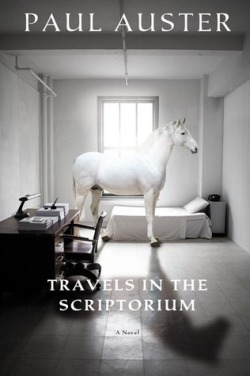
Travels in the Scriptorium

Mi-e teama de singuratate. Mereu mi-a fost. Atat de teama incat am acceptat ani la randul iluzia unei inchipuiri. Atat de teama incat nu am vrut sa vad sau sa inteleg cat de singuri suntem in aceste iluzii, in aceste creionari ale oamenilor pe care dorim sa ii pastram in viata noastra si pe care ii consideram speciali. Atat de singuri incat nu mai vedem ca acei oameni pe care candva i-am venerat si i-am pretuit nu mai sunt demult aici, cu noi. Dar continuam sa ne hranim prin amintiri.

Ne inchidem adeseori intr-o camera ideala, feriti de Realitatea mult prea nemiloasa, nemaigandind, nemaidorind sa ne amintim, captivi in rutina, in cotidian, in iluzii si afundati in temerile noastre pentru a mai vedea si altceva. Daca dam frau liber imaginatiei si incercam sa ne jucam putin cu filosofia sau cu teologia, am putea ajunge si noi in camera lui Paul Auster, din Travels in the
Scriptorium.

“Who is he? What is he doing here? When did he arrive and how long will he remain?” (1)

Travels in the Scriptorium este o carte ideala pentru o zi caniculara, de vara, scurta si simpla, dar care ne antreneaza imaginatia. Suntem cu totii niste Mr. Blank, prea absorbiti de fricile noastre pentru a mai indrazni sa verificam daca usa este sau nu deschisa, prea adanciti in remuscari inconstiente pentru a ne aminti de ceea ce am facut sau de oamenii pe care i-am ranit. Si de ce nu, suntem cu totii niste personaje in cautarea raspunsurilor de mai sus. Cine suntem? Ce cautam aici? Cum am ajuns aici, cat vom mai sta? Ne jucam de-a Dumnezeu, asa cum demult, poate un Dumnezeu/creator s-a jucat cu noi. Si la fel ca el, ne intrebam la sfarsitul unei zile “When is this nonsense going to end?”


It will never end. For Mr. Blank is one of us now, and struggle through he might understand his predicament, he will always be lost. I believe I speak for all his charges when I say he is getting what he deserves – no more, no less. Not as a form of punishment, but as an act of supreme justice and compassion. Without him, we are nothing, but the paradox is that we, the figments of another mind, will outlive the mind that made us, for once we are thrown into the world, we continue to exist forever, and our stories go on being told, even after we are dead.” (129)

March 7, 2013

At the Core of Literature


I feel home here, but I am not sure if I really belong to this place – among letters, sounds, words and stories, amongonce upon a time and they lived happily ever after, among the strongest feelings that we as human experience, among Everyman and Everywoman ….
Paul Auster reminded me of why I had chosen literature, of my dreams and defeats with bookclubs, of the things that I couldn’t say, of why I had wanted to study literature, of my interest in details (and how important they are in analyzing and understanding fiction), of (im)possible PhDs. There are many things that I could say about this writer, passages that made me stop from reading so that I could write dozens of ideas on my tiny papers. There were moments when I felt the urge to take a pen and start writing myself. There were moments when he pissed me off, moments of suspense, moments of twists, moments when I felt that something was missing … The New York Trilogy is about writing, fiction in fiction, about characters that are partly conscious of their condition in their own fiction, about America and its myths, the Adamic myth, the Garden of Eden, its great thinkers that mold its beginnings (Hawthorne, Melville, Emerson, Thoreau),  satires, games of the mind, reality and fiction. When you finish reading this book, you want to start it all over again, to see the elements that you have missed, to understand this maze of words and images and actions …
“Every life is inexplicable, I kept telling myself. No matter how many facts are told, no matter how many details are given, the essential thing resists telling. To say that so and so was born here and went there, that he did this and did that, that he married this woman and had these children, that he lived, that he died, that he left behind these books or this battle or that bridge – none of that tells us very much. We all want to be told stories, and we listen to them in the same way we did when we were young. We imagine the real story inside the words, and to do this we substitute ourselves for the person in the story, pretending that we can understand him because we understand ourselves. This is a deception. We exist for ourselves, perhaps, and at times we even have a glimmer of who we are, but in the end we can never be sure, and as our lives go on, we become more and more opaque to ourselves, more and more aware of our own incoherence. No one can cross the boundary into another – for the simple reason that no one can gain access to himself.”(248-249, 3. The Locked Room)

February 1, 2013

Vals


Cand nu ,,ma prafuieste timpul peste hartii”, planificari, portofolii si alte maruntisuri, candva in sali de curs, astazi in cancelarii:
 “There were men and women, children and old people, teenagers and babies, rich people and poor people, black men and white women, white men and black women, Orientals and Arabs, men in brown and gray and blue and green, women in red and white and yellow and pink, children in sneakers, children in shoes, children in cowboy boots, fat people and thin people, tall people and short people, each one different from all the others, each one irreducibly himself.” (Paul Auster – The New York Trilogy, p.54)
P.S Mi-e dor de acest amestec de culori dintr-un parc vechi de cand lumea.
http://luizalazar.deviantart.com/gallery/?offset=96#/d5idw2e

Leap of Faith

Pentru o buna perioada de timp, acesta a fost anul in care mi-am pierdut cuvintele si a trebuit sa ma gasesc pe mine in naufragiul produs.  ...